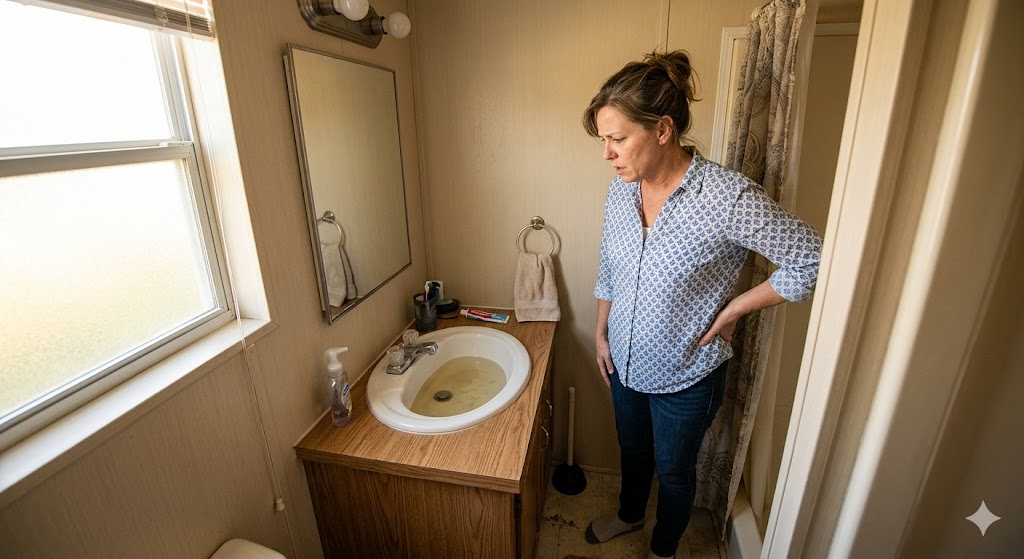
If you’ve ever noticed water pooling at your feet during a shower, a sink that takes forever to empty, or a mysterious gurgling coming from your toilet – you know the frustration of a slow drain. But here’s what most Largo homeowners don’t realize: not all drain problems are the same, and the fix for a clogged kitchen sink is very different from what you’d need for a backed-up sewer line.
Knowing which drain is actually the problem can save you time, money, and a whole lot of stress. In this guide, we’ll walk you through the telltale signs of each type of drain issue – sink, shower, and sewer – so you know exactly when to grab a plunger, when to try a DIY fix, and when to call a professional drain cleaning service in Largo.
Why Drain Problems Are So Common in Largo, FL
Before diving into the specifics, it helps to understand why Largo homes deal with clogged drains more than homeowners in other parts of the country.
Florida’s hard water is loaded with minerals like calcium and magnesium that build up inside pipes over time, gradually narrowing the passageway and slowing drainage. Add to that the high humidity that encourages soap scum buildup, the sandy soil that allows tree roots to creep into sewer lines, and the aging plumbing infrastructure in many of Largo’s mobile home communities – and you’ve got a recipe for frequent clogs.
The good news is that most drain problems follow predictable patterns. Once you learn to read the signs, you can act fast before a minor inconvenience turns into a costly repair.
The Sink Drain: Hair, Grease, and Soap Scum
What Causes Sink Clogs?
Sink drains – whether in the kitchen or bathroom – are the most commonly clogged drains in any home. In the kitchen, the culprit is almost always grease and food debris. When cooking oil or fat goes down the drain, it cools and solidifies inside your pipes. Over weeks and months, it collects food particles and builds into a stubborn blockage.
In bathroom sinks, the problem is usually a combination of hair, toothpaste residue, and soap scum. These materials don’t flush cleanly; they cling to the inside of your drain pipe and accumulate gradually.
Signs Your Sink Drain Needs Cleaning
- Water drains noticeably slower than it used to
- Standing water collects in the basin before slowly draining
- A foul odor rises from the drain – often a sign of trapped organic matter decomposing inside the pipe
- You hear a faint gurgling sound as the water drains
- The slow drainage is isolated to just one sink
That last point is important: if only one fixture is affected, the clog is almost certainly localized to that drain’s individual pipe, not the main sewer line. This is good news – it means the fix is usually straightforward.
What You Can Do First
For mild sink clogs, a few DIY steps are worth trying before calling a plumber:
- Remove and clean the drain stopper — bathroom sink stoppers collect hair and gunk underneath them and are often the primary culprit.
- Use a drain snake or zip-it tool — these inexpensive tools can pull out hair clogs from bathroom sinks effectively.
- Boiling water flush — for kitchen sinks with grease buildup, carefully pouring near-boiling water down the drain in stages can help loosen the clog.
- Baking soda and vinegar — a natural alternative to chemical drain cleaners that won’t damage your pipes.
For more hands-on guidance tailored to Largo mobile homes specifically, check out our post on DIY tips to clear drains in your Largo trailer home.
When to Call a Pro
If the clog keeps coming back, or if DIY methods don’t work after two or three attempts, it’s time for a professional. Recurring sink clogs often mean the blockage is deeper in the pipe than a consumer-grade snake can reach, or that there’s a buildup issue throughout the drain line that needs hydro-jetting to fully clear.
The Shower Drain: Hair’s Worst Enemy
What Causes Shower Clogs?
Shower drains are notorious for one thing: hair. Combined with soap residue, body oils, and shampoo, hair forms dense, tangled mats that catch everything else flowing down the drain. In Florida’s hard-water environment, mineral deposits compound the problem by roughening the interior pipe walls and giving buildup something to grip.
Mobile homes in Largo often have smaller-diameter drain pipes than traditional homes, which means shower clogs can develop more quickly and feel more severe when they do.
Signs Your Shower Drain Needs Cleaning
- Water pools around your feet during a shower and drains very slowly afterward
- The water level rises higher than usual before beginning to drain
- A musty or sulfur-like smell comes from the shower drain – this is typically trapped hair and organic matter
- The clog clears momentarily but keeps coming back within days or weeks
- You’ve already cleaned the visible drain cover and it didn’t solve the problem
Again, the key indicator that this is a shower-specific issue (and not something deeper) is that the problem is isolated to the shower. Your toilet flushes fine, your sinks drain normally, and there’s no gurgling elsewhere in the house.
What You Can Do First
Shower drain clogs are among the most DIY-friendly fixes in plumbing:
- Pull the drain cover and physically remove the hair clog — often you can see it just below the cover. A pair of needle-nose pliers or a drain hook tool makes this easy.
- Use a standard plunger — a few firm plunges can sometimes dislodge a soft clog that’s just out of reach.
- Try a plastic drain snake — flexible, inexpensive, and effective for hair clogs in the upper few feet of the drain pipe.
Avoid using chemical drain cleaners repeatedly in shower drains. While they can dissolve hair clogs temporarily, they also corrode pipe joints over time – a particular concern in older mobile home plumbing systems.
When to Call a Pro
If the shower drain is slow even after you’ve cleared visible hair, or if the clog returns within a week, the blockage is likely further down the line. A professional sink drain unclogging service – which covers shower drains too – uses camera inspection to pinpoint exactly where the buildup is and clears it completely with professional-grade equipment.
The Sewer Line: When the Whole House Is the Problem
What Causes Sewer Line Issues?
This is where things get more serious. Your home’s main sewer line is the single pipe that carries waste from every fixture in your house out to the municipal sewer system. When this line is blocked or damaged, it affects everything – not just one drain.
In Largo and throughout Pinellas County, the most common causes of sewer line problems are:
- Tree root intrusion — Florida’s sandy soil makes it easy for roots to grow toward the moisture in sewer pipes, eventually cracking and blocking them
- Grease accumulation — years of grease buildup from kitchen drains collecting in the main line
- Pipe collapse or corrosion — particularly in older homes with cast iron or clay sewer pipes
- Flushing inappropriate items — wipes, paper towels, and hygiene products that don’t break down
Signs Your Sewer Line Needs Attention
This is the most important category to recognize, because a sewer line backup can cause sewage to come up through your drains – creating a health hazard and significant property damage. Watch for these warning signs:
- Multiple drains are slow or clogged at the same time — the kitchen sink, bathroom sink, and shower all draining slowly is a classic sewer line red flag
- Toilet gurgles when you run the sink — or the toilet water level rises when you flush elsewhere in the house
- Water backs up in unexpected places — flushing the toilet causes water to come up in the shower, or running the washing machine causes a backup in the sink
- Sewage smell throughout the house or yard — this indicates a possible crack or break in the sewer line
- Wet or unusually green patches in your yard — a broken sewer line underground can fertilize the grass above it
If you’re experiencing any combination of these symptoms, do not wait. A sewer line problem that goes unaddressed can escalate into emergency territory fast.
What You Should (and Shouldn’t) Do
Do not attempt to snake or plunge a sewer line backup yourself. Without camera inspection, you won’t know if you’re dealing with a soft clog, a root intrusion, or a collapsed pipe – and using the wrong approach can make things worse or mask the real problem.
Instead, shut off water use in your home as much as possible and call a plumber immediately. For Largo residents who’ve faced this situation, our post on emergency drain cleaning in Largo covers exactly what to expect and how fast professional help can arrive.
Our team uses sewer camera inspection to diagnose the issue precisely, then clears it with hydro-jetting or mechanical augering depending on what the camera reveals. In cases of root intrusion or pipe damage, we’ll also walk you through pipe replacement options and help you understand the most cost-effective path forward.
Quick Reference: How to Tell Them Apart
| Symptom | Likely Culprit |
|---|---|
| One sink drains slowly | Sink drain clog |
| Shower pools water, toilet is fine | Shower drain clog |
| Multiple drains slow at once | Sewer line blockage |
| Toilet gurgles when sink runs | Sewer line blockage |
| Sewage smell in yard | Cracked sewer line |
| Slow drain returns after DIY fix | Deep pipe buildup – call a pro |
| Water backs up in shower when flushing | Sewer line blockage – urgent |
Mobile Homes Require Extra Attention
If you live in one of Largo’s many mobile home communities, it’s worth noting that the plumbing in manufactured homes has some important differences from site-built houses. Pipes are often smaller in diameter, run under the floor in exposed locations, and can be made of materials that age differently than traditional copper or PVC.
This means clogs can develop faster, and sewer line issues can sometimes be harder to diagnose without specialized knowledge. Our team focuses specifically on mobile home plumbing repair near Largo and understands these nuances inside and out.
We’ve covered some of the most frequent issues mobile home owners face in our guide to the top 5 plumbing issues in Largo mobile homes – well worth a read if you live in a manufactured or trailer home.
Don’t Ignore a Slow Drain
It’s easy to put up with a slightly slow drain for weeks or months, telling yourself you’ll deal with it eventually. But in Largo’s climate, small problems compound quickly. What starts as a minor soap scum buildup can turn into a full blockage. A hairline crack in a sewer pipe can become a full collapse. A small root intrusion can grow into a complete obstruction.
The smartest move is to pay attention to what your drains are telling you, match the symptom to the source using the guidance above, and act before the problem escalates.
If you’re not sure what you’re dealing with, or if DIY attempts haven’t solved the problem, contact Plumbing of Largo for a professional diagnosis. We serve Largo and all surrounding Pinellas County communities — including Clearwater, Seminole, Oldsmar, and St. Petersburg — with same-day service and upfront pricing.
Call us at (727) 558-4341 or get a free quote online – we’re available 24/7 for drain emergencies.
Leave a Reply